
Claude skills directory
Short answer
A Claude skills directory is a browsable catalog of reusable instructions for Claude and other agents, with links to their sources. AgentSkillsDir is an independent, source-linked directory for discovering Claude and Codex skills, plus separate MCP server and agent collections. It is not Anthropic’s official documentation or a hosted runtime.
How to use itBrowse by task, open a skill card, then review its source and follow the upstream installation instructions for your client.
- 328 entries
- 34 publishers
- 324 with an open license
- Checked 17 Oct 2026 – 3 Nov 2026
All Claude skills
328 entries, metadata checked 17 Oct 2026 – 3 Nov 2026
Use case
Productivity113Development72Security analysis69Scientific research65Threat detection18Incident response & forensics17Creative tools15Cloud & infrastructure security12Application & supply-chain security10Identity & email security3Integrations3OT & ICS security3Publisher
alirezarezvani27addyosmani21mukul97517vercel-labs8phuryn6alchaincyf2K-Dense-AI20xS4N4TG1AirsupHQ1artouc1cloudflare1cursor1debpalash1EL4CTEO1Fission-AI1Garinmckayl1garrytan1GhostPawJS1Graphify-Labs1Jakeschincariol1juliobsz1lemomo-ai1Leonxlnx1mattpocock1tt-a1i1wheresryan221Yuan1z08251anthropics0assafkip0DietrichGebert0FeedHive0footalytics0heydamir0kepano0Community first · Anthropic official entries follow. Sort applies within each group.
 agent-browserVercel Labs’ browser automation CLI for AI agents (Chrome via CDP, accessibility-tree snapshots) and its discovery skill. Install the CLI, add the skill, then load workflows with agent-browser skills get core.
 archifytt-a1i’s Archify agent skill: turns an idea, plan or codebase into a standalone interactive HTML architecture diagram for people to explore and share.
 graphifyGraphify Labs’ /graphify skill and CLI: turns a folder of code, docs and PDFs into a queryable knowledge graph for coding agents. PyPI package graphifyy (double y).
 VoiceStudioAgent skill and MCP endpoint for debpalash/VoiceStudio, an open-source local voice studio: speech, transcription, cloning, dubbing. Needs the app running on your machine.Local dependenciesAGPL source
 pstackLauren Tan’s (poteto) skill pack for rigorous AI-assisted engineering: run setup, then /poteto-mode routes playbooks and the other skills.
 GhostPaw CodexLocal memory for AI agents in one SQLite file.Local dependencies
 OpenSpecA lightweight specification workflow that aligns a proposed change, its design and tasks before implementation.
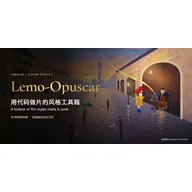 Lemo-OpuscarA code-driven film toolkit with 59 documented styles, guides and rendering tools for creating short films with a coding agent.Local dependenciesExecutes code
 anatomyAgent skill that builds detailed, interactive isometric illustrations of real machines and technical ideas as SVG, with optional WebGL effects.
 gstackGarry Tan’s Claude Code skill set with role-based tools for planning, design, engineering review, QA, release and docs.
 Skills for Real EngineersComposable engineering skills for requirements, test-driven development, architecture review and turning plans into small tasks.
 awwwardsGuides website planning, implementation and browser checks, with a separate jury skill for reviewing the result.
 huashu-motionBuilds product videos with a local motion runtime, composed audio and a browser editor for frame-specific revisions.
 Taste SkillFrontend design skill that gives agents an art direction, reference layouts and a browser check before calling a page done.
 Huashu DesignHuashu Design by 花叔 (alchaincyf) helps agents build hi-fi HTML prototypes, slide decks and animations with MP4 export, plus structured design reviews. Not meant for SEO websites or production web apps.
 AnimaBuilds interactive biology diagrams with isometric structures, mechanism controls and references for displayed claims.
 Blender Agent SkillsPackages Blender modeling, materials, animation, rendering and asset checks as a collection of agent skills.
- code-reviewReviews implementation boundaries for actionable correctness defects, tracing each finding from an agreed contract to the code that violates it.
- dummy-datasetGenerates synthetic datasets from requested columns and constraints, producing test fixtures in formats such as CSV, JSON or SQL.
- intended-vs-implementedCompares a system's intended behavior with its implementation, building an explicit model of expectations to reveal gaps generic scanners may miss.
- nature-image2pptReconstructs screenshot or image-only slides as editable PowerPoint objects, separating layout elements and text rather than merely embedding a full-page image.High static risk — review source first
 papercut-explainerCoordinates nine skills and a Remotion library to make vertical explainers with layered paper scenes and timed captions.
- shipping-artifactsAssembles the durable documentation needed to review an AI-built application, covering architecture, permissions and operational evidence before shipping.
- sql-queriesDrafts SQL from a question and supplied schema information, targeting supported warehouse dialects while making the query's assumptions visible.
- test-scenariosDerives test scenarios from user stories, recording starting conditions, roles, actions and expected results for systematic quality review.
- api-and-interface-designTurns API requirements into endpoint and module contracts, with attention to compatibility, error handling and interface boundaries.
- browser-testing-with-devtoolsUses browser observations, DOM inspection and console output to diagnose interface failures and check fixes in Chrome DevTools.High static risk — review source first
- ci-cd-and-automationBuilds delivery pipelines from a project's build and test commands, organizing repeatable checks before environment-specific deployment stages.
- code-review-and-qualityReviews a proposed code change across correctness and maintainability concerns, turning concrete defects into prioritized review findings.
- code-simplificationRefactors working code to make control flow and responsibilities easier to follow while preserving the existing observable behavior.
- constraint-driven-developmentConverts a project's quality expectations into a written contract, so implementation checks use explicit thresholds rather than shifting assumptions.
- context-engineeringOrganizes rules and task context for coding agents, helping a new session start with relevant information and fewer conflicting instructions.High static risk — review source first
- debugging-and-error-recoveryInvestigates failed tests, broken builds and unexpected behavior through reproducible evidence, narrowing causes before choosing a repair.High static risk — review source first
- deprecation-and-migrationPlans transitions away from old APIs or implementations, covering compatibility, user migration and the eventual removal of deprecated behavior.
- documentation-and-adrsRecords architectural choices and public-interface changes as documentation and decision records, preserving the reasons future maintainers need.
- doubt-driven-developmentChallenges a technical decision through an independent review of its assumptions, producing objections to resolve before implementation proceeds.
- frontend-ui-engineeringDevelops responsive interface components from product requirements, checking layout, accessibility and interaction behavior as part of implementation.
- git-workflow-and-versioningOrganizes branches, commits and conflict resolution for a code change, including splitting a mixed working tree into reviewable units.High static risk — review source first
- incremental-implementationBreaks a multi-file implementation into small working increments, pairing each increment with evidence that its behavior is correct.High static risk — review source first
 Machine SkillCreates interactive 3D machine explanations in standalone HTML, with small physics models and optional video capture.
- observability-and-instrumentationPlans logs, measurements and traces around a feature's production behavior, making failures and operational questions easier to investigate.
- performance-optimizationInvestigates slow frontend, backend and database paths using measurements, then evaluates whether a targeted optimization improves the observed bottleneck.
- planning-and-task-breakdownTurns an agreed specification into ordered implementation tasks, exposing dependencies and verification steps before work begins.
- shipping-and-launchChecks a proposed production launch against operational prerequisites, gathering launch checks and unresolved readiness issues before release.
- source-driven-developmentChecks an implementation approach against official references, connecting technical decisions to documented behavior instead of relying on recalled APIs.
- spec-driven-developmentCreates a specification from a new feature or project idea, making objectives, requirements and acceptance conditions explicit before coding.
- test-driven-developmentUses failing tests, a minimal implementation and subsequent refactoring to develop a behavior change with a repeatable correctness check.
- generate-imageCreates or revises raster visuals through the OpenRouter image interface, translating a visual brief into model requests and generated image assets.High static risk — review source first
- pi-agentConfigures and extends the Pi terminal coding harness, connecting model providers and local settings to reusable skills and extensions.High static risk — review source first
 stop-describing-uiReviews interface text for redundant explanations and replaces them with clearer labels, controls or spacing.
- pr-labelingClassifies a skills-CLI pull request from its description and patch, recommending labels while respecting those already assigned.
- triageTriages skills-CLI bugs using reproducible evidence, identifying narrow fixes that merit maintainer attention.
 replica-skillEleven Claude skills by Jake Schincariol that map public app flows and rebuild features clean-room style, from recon to deploy.
 Cloudflare Security AuditCloudflare’s defensive audit workflow uses reconnaissance, independent validation and source-grounded reports to investigate a codebase.
- analyzing-browser-forensics-with-hindsightExamines Chromium browser artifacts for forensic investigation; its access to sensitive browser records requires specialized evidence-handling controls.Third-party community repo, not affiliated with AnthropicFor authorized defensive security testing, incident forensics, and research only. Unauthorized access is prohibited.
- analyzing-docker-container-forensicsOrganizes evidence from Docker images, volumes and logs to investigate a compromised container and reconstruct suspicious activity.Third-party community repo, not affiliated with AnthropicFor authorized defensive security testing, incident forensics, and research only. Unauthorized access is prohibited.High static risk — review source first
- analyzing-linux-kernel-rootkitsExamines Linux memory and system observations for kernel-rootkit indicators, connecting discrepancies to a controlled forensic investigation.Third-party community repo, not affiliated with AnthropicFor authorized defensive security testing, incident forensics, and research only. Unauthorized access is prohibited.
- analyzing-memory-dumps-with-volatilityAnalyzes captured memory with Volatility to locate suspicious processes and related artifacts, requiring careful handling of potentially sensitive evidence.Third-party community repo, not affiliated with AnthropicFor authorized defensive security testing, incident forensics, and research only. Unauthorized access is prohibited.High static risk — review source first
- analyzing-packed-malware-with-upx-unpackerExamines packed malware samples to recover analyzable program structure, supporting specialist static analysis inside an isolated research environment.Third-party community repo, not affiliated with AnthropicFor authorized defensive security testing, incident forensics, and research only. Unauthorized access is prohibited.
- analyzing-uefi-bootkit-persistenceInvestigates firmware and boot artifacts for UEFI persistence indicators, organizing integrity observations for a specialist forensic review.Third-party community repo, not affiliated with AnthropicFor authorized defensive security testing, incident forensics, and research only. Unauthorized access is prohibited.High static risk — review source first
- building-super-timelines-with-plasoCombines host artifacts into Plaso investigation timelines, supporting evidence correlation while preserving the distinction between observed timestamps and inferred events.Third-party community repo, not affiliated with AnthropicFor authorized defensive security testing, incident forensics, and research only. Unauthorized access is prohibited.
- deobfuscating-javascript-malwareExamines obfuscated malicious JavaScript to support analyst understanding of its behavior, using a controlled malware-analysis context.Third-party community repo, not affiliated with AnthropicFor authorized defensive security testing, incident forensics, and research only. Unauthorized access is prohibited.High static risk — review source first
- eradicating-malware-from-infected-systemsStructures malware eradication around observed persistence and affected systems, organizing removal and verification work within an incident-response process.Third-party community repo, not affiliated with AnthropicHigh static risk — review source first
- implementing-ticketing-system-for-incidentsLinks security alerts to incident tickets, organizing ownership, escalation and service-level tracking across supported case-management tools.Third-party community repo, not affiliated with AnthropicHigh static risk — review source first
- investigating-ransomware-attack-artifactsOrganizes preservation and analysis of ransomware artifacts, retaining evidence provenance before investigators assess variant identity and incident scope.Third-party community repo, not affiliated with AnthropicFor authorized defensive security testing, incident forensics, and research only. Unauthorized access is prohibited.High static risk — review source first
- performing-dynamic-analysis-with-any-runObserves malware behavior in an interactive cloud sandbox, organizing execution findings for specialist analysis with isolation and disclosure considerations.Third-party community repo, not affiliated with AnthropicFor authorized defensive security testing, incident forensics, and research only. Unauthorized access is prohibited.High static risk — review source first
- performing-insider-threat-investigationStructures an insider-threat investigation around access records and observed actions, separating evidence collection from conclusions about intent.Third-party community repo, not affiliated with Anthropic
- performing-memory-forensics-with-volatility3Examines captured RAM with Volatility 3, correlating processes and network artifacts for a controlled investigation of potentially sensitive memory evidence.Third-party community repo, not affiliated with AnthropicFor authorized defensive security testing, incident forensics, and research only. Unauthorized access is prohibited.High static risk — review source first
- performing-steganography-detectionExamines media for concealed data using steganalysis tools, organizing extraction findings for a controlled forensic investigation.Third-party community repo, not affiliated with AnthropicFor authorized defensive security testing, incident forensics, and research only. Unauthorized access is prohibited.High static risk — review source first
- performing-windows-artifact-analysis-with-eric-zimmerman-toolsParses Windows forensic artifacts with specialist utilities, organizing host timelines and evidence for an authorized incident investigation.Third-party community repo, not affiliated with AnthropicFor authorized defensive security testing, incident forensics, and research only. Unauthorized access is prohibited.High static risk — review source first
- testing-ransomware-recovery-proceduresChecks ransomware recovery plans through restore tests and recovery-time evidence, documenting whether backups support the intended clean-recovery sequence.Third-party community repo, not affiliated with AnthropicHigh static risk — review source first
 deploy-to-vercelGuides deploying applications and websites to Vercel, including test deployments.
 vercel-composition-patternsExplains reusable React composition techniques, including compound components, render props and context.
 vercel-react-best-practicesProvides Vercel Engineering guidance for performance in React and Next.js applications.
 vercel-react-native-skillsCovers performance practices for React Native and Expo, including lists, animations and native modules.
 vercel-react-view-transitionsGuides interface animations using React view transitions, including navigation and shared elements.
- adversarial-reviewerSubjects a code change to a deliberately critical review, looking for concrete weaknesses that a familiar implementation perspective may overlook.
- agent-launcher-orchestratorGuides creation and evaluation of a Claude Managed Agent in the user's account, taking an agent brief toward a launchable configuration.High static risk — review source first
- agent-protocolDefines structured messages between executive-role agents, including invocation, isolation and loop-prevention conventions for coordinated work.
- api-design-reviewerReviews REST API designs for inconsistent conventions and breaking changes, turning endpoint definitions into a structured design scorecard.High static risk — review source first
- boost-asio-proSupports asynchronous C++ networking work with Asio, covering event-loop ownership, concurrent handlers and coroutine-based client or server code.
- ci-cd-pipeline-builderUses detected stack information to draft a CI/CD baseline, with repeatable checks and distinct delivery stages for each environment.High static risk — review source first
- code-reviewerAnalyzes code changes across supported languages for complexity, correctness and review risk, producing actionable findings for pull-request review.High static risk — review source first
- coverageExamines a project's tests and coverage information to identify untested behaviors and suggest additional checks with meaningful failure detection.
- engineering-advanced-skillsIndexes an advanced engineering skill collection, helping choose a focused specialist for agent infrastructure, development or operations work.
- epic-designBuilds layered interactive websites from a visual brief, combining scroll-driven storytelling and animation without requiring a WebGL scene.
- evalCompares completed AgentHub runs using a chosen metric or judge, producing ranked results for an experiment rather than new implementations.
- feature-flags-architectPlans feature-flag rollout and retirement from a project's release needs, including kill switches, ownership and stale-flag cleanup.
- git-worktree-managerSets up isolated Git worktrees for concurrent features, coordinating branches, local ports and environment handling for separate development contexts.High static risk — review source first
- hivemindOrganizes isolated coding workers and benchmark comparisons for delegated work, documenting orchestration choices and claimed cost tradeoffs.High static risk — review source first
- loopConfigures an iterative research experiment with a selected interval, defining repeated runs for an existing autoresearch workflow.
- monorepo-navigatorMaps dependencies and package boundaries in a monorepo, helping select affected tests and builds instead of processing every package indiscriminately.
- named-persona-adversarial-reviewReviews code using explicitly named engineering philosophies, comparing concrete implementation choices against documented principles rather than generic checklists.
- pw-reviewReviews Playwright tests for weak assertions and unreliable execution patterns, producing improvements to browser-test quality and maintainability.
- rag-architectDesigns retrieval pipelines around document chunking, embeddings and search evaluation, relating architecture choices to measurable retrieval quality.
- runCoordinates the stages of an AgentHub experiment from baseline through evaluation and merge, using the session's selected competition workflow.
- saas-scaffolderScaffolds a SaaS application's authentication, database, billing and dashboard structure using the source's supported full-stack conventions.High static risk — review source first
- senior-computer-visionSupports computer-vision system design across detection and segmentation tasks, connecting model architecture and training choices to visual-analysis requirements.High static risk — review source first
- senior-fullstackCompares full-stack architecture choices and scaffolds supported application stacks, pairing implementation structure with code-quality assessment.High static risk — review source first
- snowflake-developmentSupports Snowflake SQL and data-pipeline development, including managed table updates, stream/task processing and Cortex-based data features.High static risk — review source first
- sql-database-assistantUses database schemas and a query goal to draft SQL, migrations or optimization suggestions for common database and ORM workflows.High static risk — review source first
- stage-launchConverts an approved managed-agent build sheet into API payloads and a resumable launch sequence using the user's own credentials.High static risk — review source first
- write-a-skillTurns a repeatable task into a structured agent skill with focused instructions, progressive references and the supporting resources it needs.
Guides that use this category
 Best Blender MCP Servers & Skills (2026)Blender MCP connects an AI client to a running Blender session through the Model Context Protocol, so the model can read your scene and run Python through Blender’s API.Blender Agent Skills
 Install Claude Code Skills: Folder, Plugin & CLIChoose one of three ways to install Claude Code skills: copy a complete skill folder, install a plugin from its marketplace, or use npx skills add with Claude Code selected.frontend-designpdfvercel-react-best-practices
 Claude Code Security: Audit & Hardening SkillsA Claude Code security review starts with an authorized scope and a question to investigate.Cloudflare Security Auditsecurity-and-hardening
 Best Codex Skills (2026)Codex can use agent skills: folders with a SKILL.Skills for Real EngineersgstackTaste SkillawwwardsAI Slop DetectorGhostPaw Codexhuashu-motionLemo-OpuscarMachine SkillanatomyBlender Agent Skills
 Best Claude Skills for Video EditingPick a Claude skill by the video you need to ship.huashu-motionpapercut-explainerLemo-OpuscarMachine Skill
Skills directory and structure FAQ
6 questions · what the directory is, how skill folders are laid out, how to submit
What is a Claude skills directory?
A Claude skills directory is a browsable catalog of reusable instructions for Claude and other agents, with links to their sources. AgentSkillsDir is an independent, source-linked directory for discovering Claude and Codex skills, plus separate MCP server and agent collections. It is not Anthropic’s official documentation or a hosted runtime.
What is the typical Claude / agent skills directory structure?
Under the common Agent Skills convention, each skill has its own folder with a SKILL.md file. Optional scripts/, references/ and assets/ folders hold supporting code, documents and templates. This is a common layout, not a requirement for every listed project: follow each repository’s layout and your client’s documentation.
How is AgentSkillsDir different from claude.com docs / skillmd?
AgentSkillsDir provides source links and independent editorial summaries to help you discover resources. It is separate from Anthropic’s official Claude documentation and from other directories such as skillmd. Use official documentation for Claude product behavior and each publisher’s repository for setup, compatibility and license terms. A listing does not certify safety or successful installation.
How do I find the best Claude skills or MCP servers from here?
Start with the task and client you need, then compare the source-linked entries. For focused shortlists, use the video skills, Codex skills or Cursor MCP guides below. Check each candidate’s prerequisites and source terms; inclusion is not a promise that it will work in your setup.
How do I submit a skill or MCP server?
Open the submission page and share the public repository or project URL for manual review. Nothing is published automatically, and listing is not guaranteed. If online intake is unavailable, email the public link to submit@agentskillsdir.com.
What is a SKILL.md file?
SKILL.md is the instruction file in an Agent Skills folder. In the standard format, YAML front matter records a name and description, followed by Markdown instructions explaining the task. Read it and any supporting scripts before enabling a skill; the file is instructions, not proof of an audited or tested workflow.